Dice Have No Eyes God Run Guide
Treat the 1.0 finale as a finished build exam—not a place to learn banking under fire.
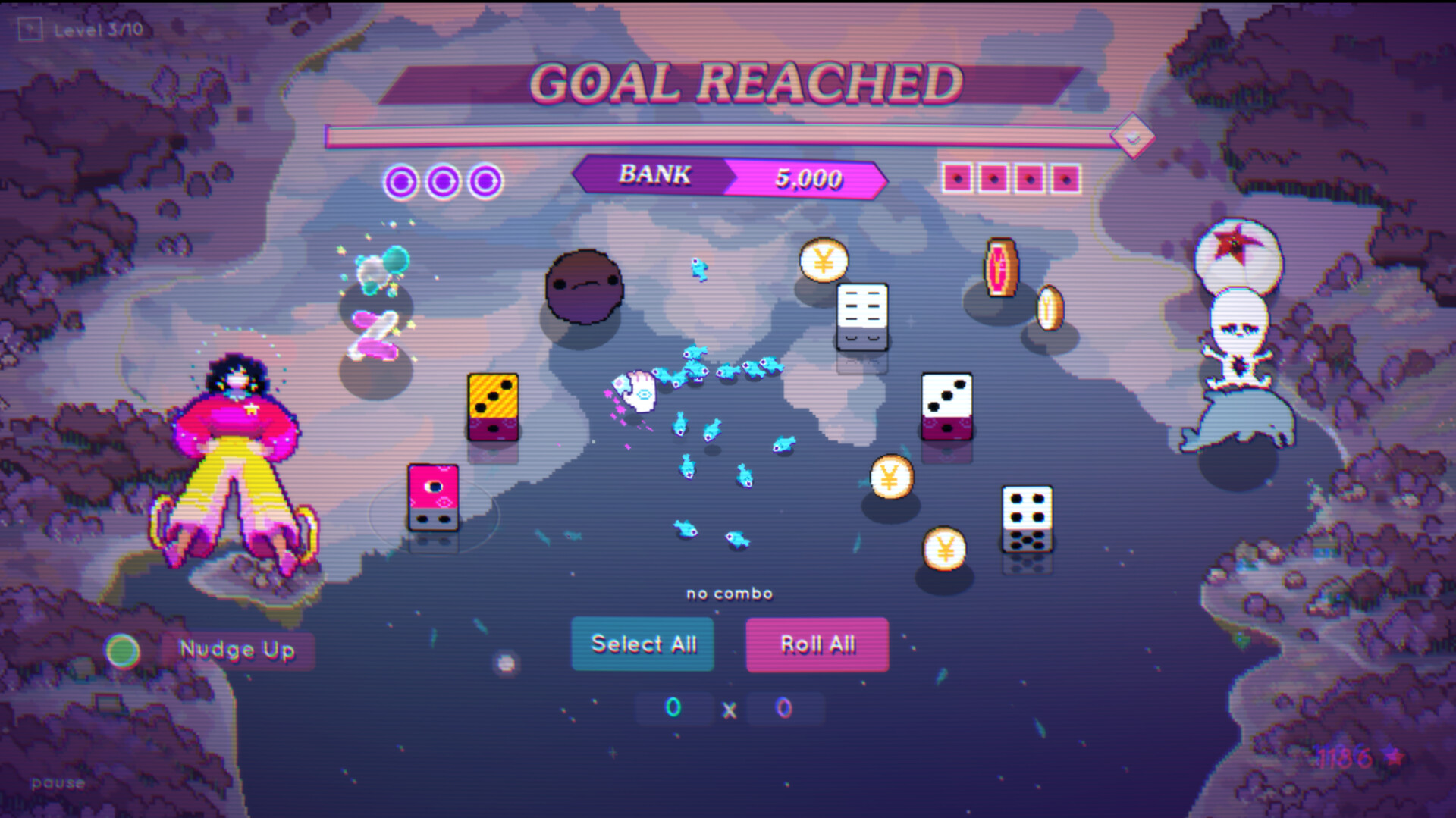
The God run is the finale Franek and Max Cahill promised through Early Access and finally shipped with the November 20, 2026 1.0 launch of Dice Have No Eyes. Store copy always teased meeting an entity claiming to be God—and maybe waking up. Version 1.0 turns that tease into a real route sitting above Faraway Lands bets and Rift tourism. This guide assumes you already understand the roll–bank–bust loop. If you do not, stop here and clear Getting Started first. Depth layout lives on Depths and Boards. Patch framing lives on Version 1.0.
God run is not a second tutorial. It is an exam of habits you should already trust: when to bank, when a snack is insurance, when a trinket verb is finished, and when pride is about to donate the evening.
What “finale” means mechanically
Every depth in Dice Have No Eyes reuses the same greed engine. You roll poker-like hands, bank score or risk another throw, and lose unbanked points on a bust. Momentum rewards scored hands and resets when the turn ends. Between boards you feed dice, buy from the hundred-plus trinket pool, and spend spells or snacks from the forty-plus set. Companions from the thirteen-power roster hang off every draft.
What changes on God run is the tax on unfinished kits. Earlier depths forgive a museum of half ideas. The finale expects a coherent verb—Mirror copying, Skip tempo, Hardy sustain, controlled Doom, baby conversion, shield banking—plus a face you can narrate in one sentence. Browse relative strength on Trinkets and Builds and faces on the Players hub before you treat the dream as a highlight reel.
Prep path: Faraway Lands → Rift → God run
Faraway Lands first
Faraway Lands stretch the run to ten levels with three nightmares and bets. Betting changes when a “safe” hand is actually enough. If you cannot describe a bet policy out loud, you are not ready for finale pressure. Practice modest bets you planned, not max bets you romanticized. Nightmares are rehearsal for finale spikes: shrink optional rolls, spend protection earlier, accept clean clears.
Rift as endurance school
The Rift board lets you choose how deep to push. That freedom trains the exact muscle God run needs: stop when the plan is done, not when the pile looks pretty. Set a personal depth goal before the climb. Use mid-run saves from 1.0 so a long practice session can pause without losing the board. Hardy packages and careful nurseries shine here; Hotdog one-turn spikes are specialty tools, not defaults.
Japanese and Western coverage of 1.0 also frame Rift as a place where long-form collection fantasies—including tooth-adjacent board goals—matter. Treat that as endurance homework, then bring the calm into God run.
Only then open God run
Enter God run when:
- Shallows clears are boringly consistent.
- Faraway Lands bets feel like plans, not coin flips.
- You have survived a meaningful Rift session using a mid-run save.
- Your shop buys answer a verb, not a mood.
- You can bank a winning pile without a pep talk.
If any line fails, return to Depths and Boards and rebuild.
Banking discipline under finale pressure
God run punishes the exact greed pattern that worked in Early Access highlight clips. A mid hand that already covers the need should usually be banked. Extra rolls are for shortfalls with mitigation, not for theater. Ask the same three questions from how-to-play habits:
- Does the board still require more score than I have?
- Do I have a snack, spell, or die effect that softens failure?
- Am I rolling for the plan—or for the screenshot?
If question one is no, bank. If question three is the only yes, bank harder. Anger at the thought of losing the pile is a signal the pile is large enough to lock.
Reserve at least one snack or spell for a finale spike instead of spending every tool on stylish mid-run overscores. Momentum is a short story: score, grow carefully, close the turn while the streak still means something.
Endings: about fifteen scenes, not one credits roll
Launch coverage repeatedly highlights ending content around fifteen scenes, including character-flavored finales. Completionism is no longer only a high score. Note which face you used when a scene triggers. Do not spoil yourself in Discord if you want the dream intact—then come back for mechanical help.
Practical ending tips:
- Keep a tiny note of face + depth when something narrative unlocks.
- Use mid-run saves before risky finale attempts so a bust does not erase an evening.
- Treat character customization and cassette playlists as comfort after fundamentals, not as substitutes for banking.
- Leaderboards can wait until your ending route is intentional.
Mid-run saves as training tools
The most practical 1.0 gift for real schedules is the ability to save mid-run and continue later. On God run, use saves as practice tools:
- Save after a clean board before a nightmare-like spike.
- Experiment with one greed line, reload the save mindset on the next session if tilt starts rewriting rules.
- Stop when tired eyes make pastel boards smear—night mode helps, sleep helps more.
Saves do not make busts free. They make discipline affordable.
Build checklist before you queue the finale
- Face: one you trust under pressure—Wizard for high-floor banking, Anais only with a finished nursery plan, dog kits only if tempo matches the route, Tooth Fairy after you understand 1.0 identity goals.
- Companion: a passive that matches the verb, not the mascot art. See companions notes via Players.
- Trinket verb: finished Mirror, Skip, Hardy, Doom, or baby conversion—not five unfinished museums.
- Dice feeding: babies and snacks that support the hands you already score.
- Protection budget: snacks/spells reserved for the boards that matter.
- Bet literacy: already proven on Faraway Lands.
- Endurance literacy: already proven on Rift.
Rebalanced upgrade prices in 1.0 mean Early Access “never affordable” instincts may be wrong. Retest shops before you blame the God n’ Fate engine.
Common God run failures
- Using the finale to learn banking.
- Entering with a highlight-reel Hotdog draft and no plan B.
- Spending every snack before the real spike.
- Chasing leaderboard numbers while endings are still a mystery to you.
- Ignoring mid-run saves and forcing a tilted three-hour sit.
- Copying pre-1.0 shop prices and under-upgrading.
- Treating cracked or unholy die drama as a personality trait instead of a risk you manage with 1.0’s gentler handling and cleanse tools.
Suggested evening plan
- Warm up on a short Shallows clear to confirm controls and night mode comfort.
- Play one Faraway Lands run with a modest planned bet.
- Push a Rift segment, save mid-run, stretch, resume only if calm.
- Attempt God run with a written verb and a reserved protection snack.
- Note any ending scene triggers, then stop when tilt starts rewriting banking rules.
- Compare notes with Trinkets and Builds and Version 1.0.
Related wiki routes
- Depths and Boards — how Shallows, Faraway Lands, Rift, and God run differ
- Version 1.0 — launch features, QoL, migration from Early Access
- Trinkets and Builds — finish a synergy before the finale
- Players — faces, companions, Tooth Fairy context
- Getting Started — if you skipped fundamentals
The dice have no eyes. God run asks whether you still do when the pile looks holy and the next roll whispers destiny. Bank when you should, push when you mean it, and let the ending decide whether you wake up.
Frequently Asked Questions
Quick answers to the most common questions.
What is the God run in Dice Have No Eyes?
God run is the 1.0 finale route above Faraway Lands and Rift—the place where the “meet God / maybe wake up” fantasy becomes a real endgame challenge.
Should I attempt God run as a new player?
No. Clear Shallows, learn Faraway Lands bets, practice Rift endurance with mid-run saves, then bring a finished build verb into God run.
How do endings work with God run?
Launch coverage highlights around fifteen ending scenes, including character-flavored finales. Note which face you used when scenes trigger, and use mid-run saves before risky attempts.
Why do mid-run saves matter on God run?
They let you pause long finale practice without losing the session, stop on tilt, and treat saves as training tools rather than only as pause buttons.
What should I study before God run?
Depths and Boards for structure, Trinkets and Builds for a finished verb, Players for face and companion fit, and Version 1.0 for launch QoL and rebalances.