Dice Have No Eyes Depths and Boards Explained
From the Shallows tutorial depth to Faraway bets, endless Rift pushes, and the God run finale.
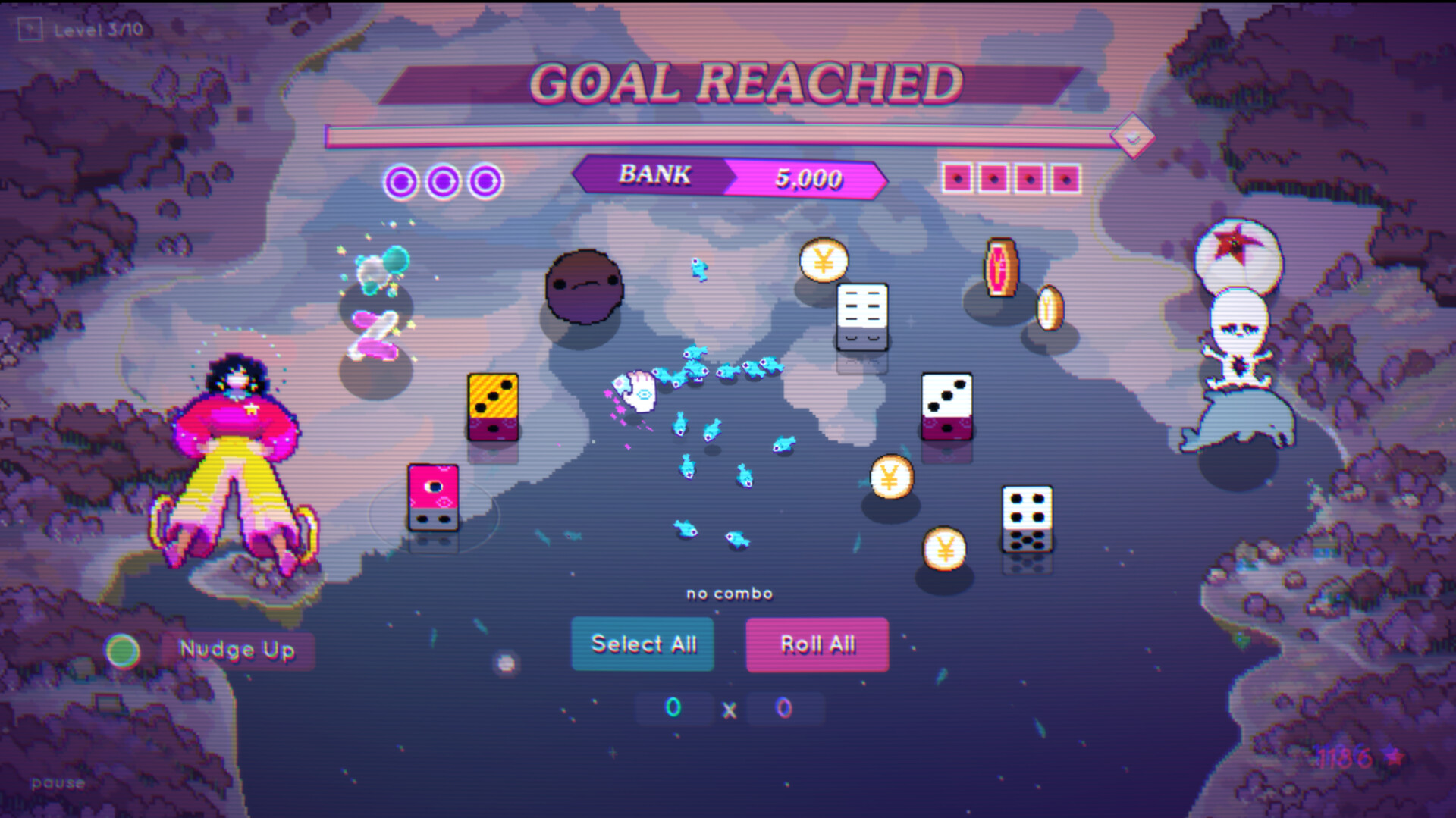
Dice Have No Eyes is structured as a journey through dreamy depths rather than one flat casino. Franek and Max Cahill ship distinct board spaces with different lessons about greed. This guide explains the Shallows, Faraway Lands, the Rift, and the God run, plus how bets and nightmares change the same roll-and-bank loop. Pair it with How to Play for bust math and Getting Started if you are still learning the shop. Habit work lives in Beginner Tips. Roster unlocks such as King Fetus, Tooth Fairy, Wizard, Liz, and Anais are covered in spirit on Players.
Why depths matter
Every depth reuses the core rules: roll for poker-like hands, bank or risk another throw, lose unbanked points on a bust, and ride momentum until the turn ends. What changes is the tax on greed. Some depths add bust pressure. Some add betting. Some let you choose how deep to fall. Some exist as finale theater where an entity claiming to be God waits at the end of a long streak of bad decisions that somehow worked.
If you treat every board like a highlight reel, later depths will feel unfair. If you treat each depth as a teacher, the difficulty curve reads as intentional.
Shallows: seven levels, two nightmares, beginner rules
The Shallows are the onboarding depth. Expect seven levels and two nightmares. The beginner framing includes extra bust chance and limited stars. That combination is not a soft playground. Extra bust chance forces early banking discipline. Limited stars discourage perfectionism while you are still learning shop routes and dice feeding.
Use the Shallows to practice the questions from How to Play: do I need more score, do I have protection, am I rolling for ego? Clear the depth with a boring bank habit before you care about star sheets. 1.0 improved beginner reward clarity so Shallows clears can still feel meaningful; take the progress and move on.
Nightmares in the Shallows are short exams. Shrink greed, spend a snack if a bust would erase a hard board, and treat survival as the grade. You are rehearsing Faraway Lands pressure in a smaller room.
Faraway Lands: ten levels, three nightmares, bets
Faraway Lands stretch the run to ten levels with three nightmares and introduce bets as a real planning layer. Betting changes the value of a “safe” hand. A mid hand that cleared a Shallows board may be insufficient after a bet tax. That is where protected greed becomes correct and unprotected greed becomes a donation.
Plan shop visits around the longer route. Ten levels mean more chances to reshape dice, collect from the hundred-plus trinket pool, and sequence spells from the forty-plus snack and spell set. It also means more chances to tilt after a nightmare. If a bet board spikes your heart rate, force a bank-first policy for the next clean level before you climb again.
Companions matter more here because unique powers interact with longer arcs. A careful companion can stabilize bet boards. An aggressive companion can turn Faraway Lands into a coin-flip festival. Match the companion to the depth, not to a trailer fantasy. Browse faces and companions through Players once you know which failure mode you are correcting.
Rift: endless depth you choose
The Rift is the endless depth where you decide how far to push. That freedom is the trap. Without a fixed finale board count, pride becomes the enemy. Set a personal depth goal before the run, not after a hot streak. Decide what you are collecting for and what bust cost you refuse to pay.
Rift play rewards mid-run saves from the 1.0 release. Stop while you are ahead. Resume later with a clear head. Leaderboards and achievements can motivate deep pushes, but they do not refund a bust that ends a beautiful climb. Treat Rift sessions like timed experiments: one goal, one protection plan, one bank policy.
Magic dice effects such as Mirror, Skip, Hardy, and Doom become more important as depth rises because small probability gaps compound. Dice babies and feeding routines should already be stable before you treat the Rift as a playground. If your kit is inconsistent in the Shallows, the Rift will only amplify the noise.
God run: the finale
The God run is the finale structure added around the full 1.0 launch. It is where the game asks whether your greed management survived everything earlier depths taught. Endings, narrative payoff, and the joke of meeting an entity claiming to be God all sit on top of the same mechanical question: can you bank when it matters?
Do not enter a God run to learn banking. Enter it to express banking you already trust. Bring a build with clear synergies from trinkets, a companion whose power you understand, and a snack or spell budget reserved for finale spikes. If you are still unlocking basic tools or still confusing Anais cash fantasies with beginner fundamentals, return to earlier depths first.
Nightmares across depths
Nightmares are pressure boards. Two appear in the Shallows and three in Faraway Lands. Their job is to interrupt autopilot. When a nightmare starts, reduce optional rolls, spend protection earlier than usual, and accept a clean clear over a stylish over-score. Nightmares are also where momentum discipline shows: ending a turn on a bank can be stronger than squeezing one more growth roll.
If nightmares feel impossible, your issue is often earlier shop choices. Rebuild for consistency. Compare relative tools later on the Tier List hub after you have firsthand notes, not before you can clear a normal board.
Bets and expected value without spreadsheet cosplay
Bets in Faraway Lands ask you to price risk. You do not need a perfect formula. You need a threshold. If the post-bet requirement demands an extra roll, make sure a spell, snack, or die effect softens failure. If the requirement is already covered, refuse the dramatic roll. Expected value in this game includes emotional tilt: a bust that ruins the next three boards has a hidden cost beyond the lost points.
How depths connect to 1.0 features
Full release on November 20, 2026 adds endings, mid-run saves, achievements, leaderboards, cassettes and playlist tools, rebalanced upgrades, and controller or Steam Deck improvements after Early Access from May 19, 2026. Mid-run saves are especially valuable for Rift and God run attempts. Playlist and night mode help long sessions. Rebalances mean some Early Access depth strategies need a fresh test.
Suggested route through the depths
- Master Shallows banking and shop basics with Getting Started.
- Internalize bust and momentum rules via How to Play.
- Clear Faraway Lands with a bet policy and nightmare plan.
- Set Rift goals before you climb.
- Attempt the God run only with a stable kit and calm hands.
- Repair bad habits with Beginner Tips whenever greed starts winning arguments.
Related wiki routes
Return to the Guides hub for the full tutorial index. Use Updates when patch notes shift board balance. Keep Players and the Tier List for loadout debates after the depths themselves make sense. The boards are dreamy. The punishments are not.
Frequently Asked Questions
Quick answers to the most common questions.
What is the Shallows depth in Dice Have No Eyes?
The Shallows are the beginner depth with seven levels, two nightmares, extra bust pressure, and limited stars, built to teach banking before harder worlds.
How is Faraway Lands different?
Faraway Lands run longer with ten levels and three nightmares, and they add betting pressure that changes when a safe hand is actually enough.
What is the Rift?
The Rift is an endless depth where you choose how far to push. Set a goal before the climb and use mid-run saves so pride does not end the session.
When should I attempt the God run?
Attempt the God run after you can clear earlier depths with stable banking, a understood companion, and protection reserved for finale spikes.
Do nightmares change the base rules?
Nightmares keep the roll-and-bank loop but raise pressure. Play tighter, spend protection earlier, and prioritize a clean clear over stylish over-scoring.