Dice Have No Eyes Version 1.0 Launch Guide
Everything that matters about leaving Early Access on November 20, 2026.
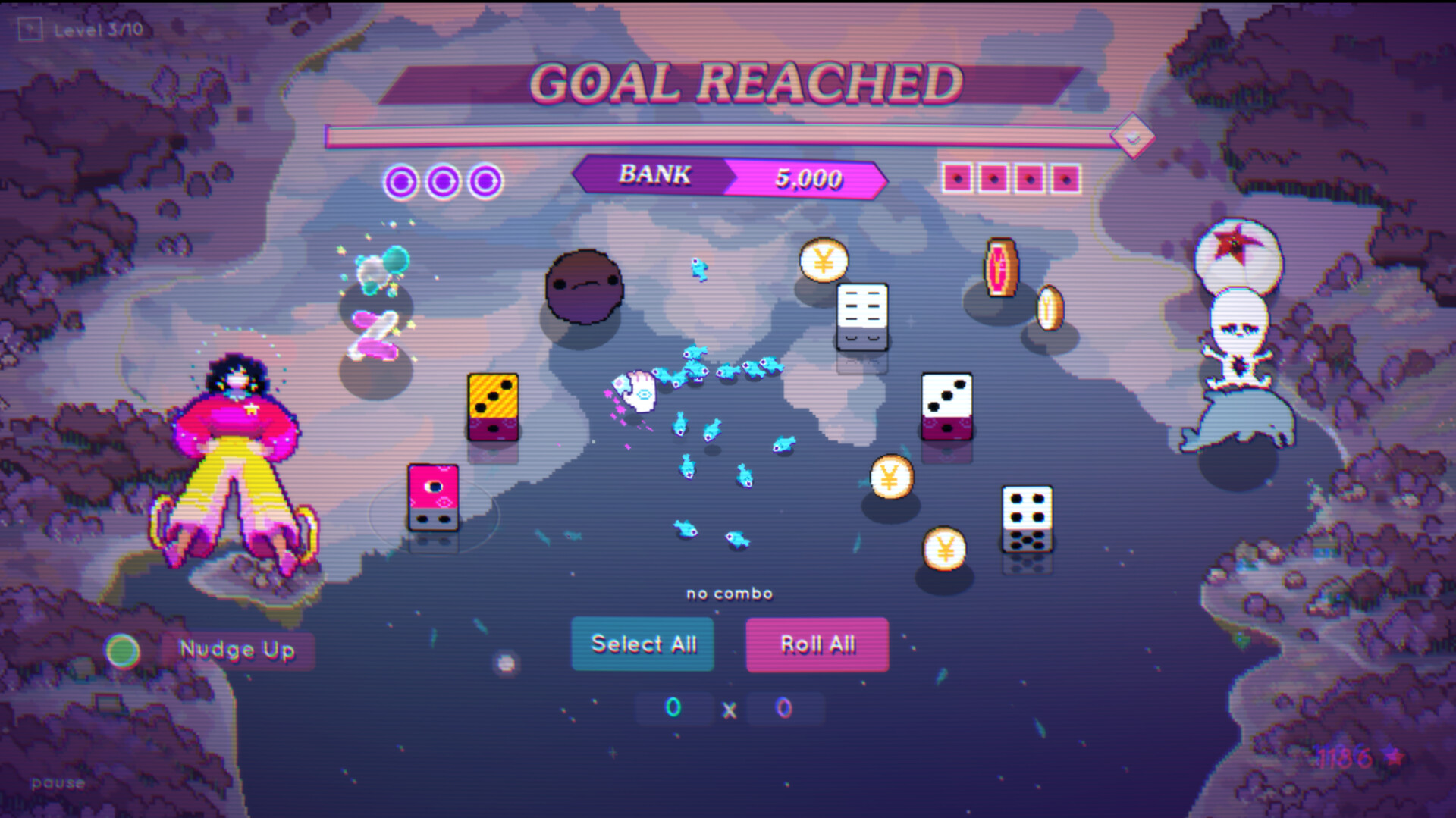
Dice Have No Eyes version 1.0 launched on November 20, 2026, ending Early Access that began May 19, 2026. Franek and Max Cahill framed it as a massive launch update: the dream finally gets a finale, long boards, new toys, and the quality-of-life players begged for. This page is a changelog-style guide for players—not a press release reprint. Use it to decide what to play first, what to relearn, and which wiki pages to open next.
Related: Updates Hub, Getting Started, Characters Hub, Tier List Hub.
Headline additions
God run — the final run
1.0 ships the God run as the endgame structure players waited for through Early Access. Mentally file it above Faraway Lands bets and Rift tourism: this is where the “meet God / maybe wake up” fantasy stops being store copy and becomes a route. Bring a finished build verb from Trinkets and Builds and a face you trust from Characters.
Practical advice: do not make God run your first session back if you have been away since May. Warm up on Shallows, confirm bets muscle memory, then climb.
Endings — about 15 scenes
Coverage of the launch repeatedly highlights ending content measured around 15 scenes, including character-flavored finales. That changes completionism. You are no longer only chasing a high score; you are collecting narrative payoffs tied to how you play and who you play.
Tips:
- Note which face you used when an ending triggers.
- Use mid-run saves before risky finale attempts.
- Do not spoil yourself in Discord if you want the dream intact—then come back for mechanical help.
Rift — the board that goes on
The Rift level/board is built for extended play. Where Shallows teaches and Faraway Lands bets spike tension, Rift asks for sustain, coherent trinkets, and companions that do not explode after one lucky turn. Hardy packages and careful Anais nurseries shine; Hotdog spikes are specialty tools, not defaults.
Tooth Fairy and roster expansion
1.0 adds Tooth Fairy plus broader “new characters, items, and babies” language. Treat Tooth Fairy like other late unlocks: exciting, not a day-one measuring stick. Update your mental tier list only after reps. See Characters Hub and the character tier list.
More scoring combinations, snacks, spells, babies
The live game already advertised 100+ trinkets and 40+ spells/snacks. 1.0 pushes more combinations and baby effects into that soup. If your Early Access muscle memory says a hand shape is impossible, recheck—the bag grew.
Quality-of-life that changes habits
Mid-run saves
The most practical 1.0 gift for real-life schedules: save in the middle of a run and continue later. This is huge for Rift and God run practice. Use saves as training tools, not only as pause buttons—experiment, save, review, continue.
Rebalanced upgrade prices
Developers called out rebalanced upgrades as a highly requested change. Progression through dice improvements should feel less punishing than older EA stretches. If you quit because everything felt locked behind brutal costs, give 1.0 another weekend.
Achievements and leaderboards
Steam achievements and global scoreboards / leaderboards arrive with 1.0. That nudges the culture from pure vibes toward comparable greed. Still single-player—no multiplayer modes—but your best banks now have a public shadow.
Cassettes and customization
Music cassettes let you build an in-game playlist. Character customisation adds outfits, distort effects, and related identity toys. Neither replaces bust math, but both make long sessions kinder. Fashion after fundamentals.
Controller, touch, Steam Deck polish
EA launched with “mouse smoothest, Deck/gamepad improving.” 1.0 continues controller/Deck work. Steam still lists Deck as Playable with caveats (occasional non-Deck prompts, small text). Read Controls and System Requirements before a handheld marathon.
Audiovisual polish and fixes
Expect bug fixes, clearer presentation, and small kindnesses (coverage even mentions gentler handling for damaged “unholy” die cases). Night mode remains part of the comfort fantasy for tired eyes.
What did not change (on purpose)
- Still single-player.
- Still a greed loop: bank or risk bust.
- Still built around trinkets, snacks/spells, companions, and eyeless dice.
- Still priced as an affordable indie purchase (regularly around $9.99, with launch discount windows on Steam).
- Still authored by a two-person team—patch cadence will look like indie hotfixes, not AAA seasons.
Migration guide: EA player to 1.0 player
- Relearn shops. Upgrade rebalance invalidates old “never affordable” instincts.
- Pick a Depth on purpose. Shallows for warmups, Faraway Lands for bets, Rift for endurance, God run for finale.
- Re-tier your mains. Anais, Dog, Hotdog, Tooth Fairy, King Fetus—availability and value shifted across the EA year.
- Rebuild one verb. Mirror, Skip, Hardy, Doom, or baby conversion—finish a package instead of collecting nostalgia items.
- Turn on the new QoL. Mid-run saves, cassettes, customization, night mode, Deck controls—use them.
- Chase endings intentionally. Keep a simple note of faces and Depths when scenes unlock.
- Check leaderboards later. Learn first, compete second.
Content checklist for completionists
- Clear Shallows cleanly again under 1.0 rules.
- Win Faraway Lands with at least one modest bet you planned.
- Survive a meaningful Rift session using a mid-run save.
- Attempt God run with a coherent build.
- Unlock and trial Tooth Fairy after basics.
- Collect cassettes without derailing drafts.
- Knock out achievements that teach systems, not only grind.
- Browse Companions and confirm your favorite passive still matches 1.0 boards.
- Reread Anais if babies expanded.
Balance philosophy reading between the lines
Across EA, notes repeatedly nerfed or softened oppressive toys (stamps fading, shield reworks, Skip fixes, bet tuning) while adding new toys (effects, dogs, fish, babies). 1.0 continues that pattern: more content, kinder progression, sharper endgame. The God n’ Fate engine remains allowed to ruin a perfect board. The update does not remove greed; it gives greed better furniture.
Wiki pages to refresh after reading this
- Tier List Hub and both child tier pages
- Characters Hub plus companions and Anais
- Tools Hub for controls and specs
- Links Hub for Steam news if hotfixes follow launch week
Short launch-week plan
Day one: Shallows refresher, one Faraway Lands run, enable night mode and confirm controls. Day two: Draft a single synergy family; practice mid-run saves on Rift. Day three: God run attempt; note endings; stop when tilt starts rewriting your banking rules.
1.0 is the same strange game with a finished spine. Bank when you should, push when you mean it, and let the finale decide whether you wake up.
Frequently Asked Questions
Quick answers to the most common questions.
What day did version 1.0 ship?
November 20, 2026 on Steam, after Early Access from May 19, 2026.
What are the biggest 1.0 features?
God run finale, ending scenes, Rift, Tooth Fairy and more items/babies, mid-run saves, achievements, leaderboards, cassettes, customization, and rebalanced upgrades.
Do I need to start a new save for 1.0?
Follow Steam/cloud guidance for your install, but plan to relearn shops and Depths either way because systems and prices changed.
Is Steam Deck support finished?
1.0 improves controller and Deck polish. Steam still rates it Playable with caveats like small text and occasional non-Deck prompts.
Where should I go after this page?
Updates Hub for earlier EA context, then Characters or Trinkets and Builds depending on whether you are picking a face or a synergy verb.