Dice Have No Eyes Companions Guide
Thirteen unique powers—and a whole lot of dog—that rewrite how greed feels mid-run.
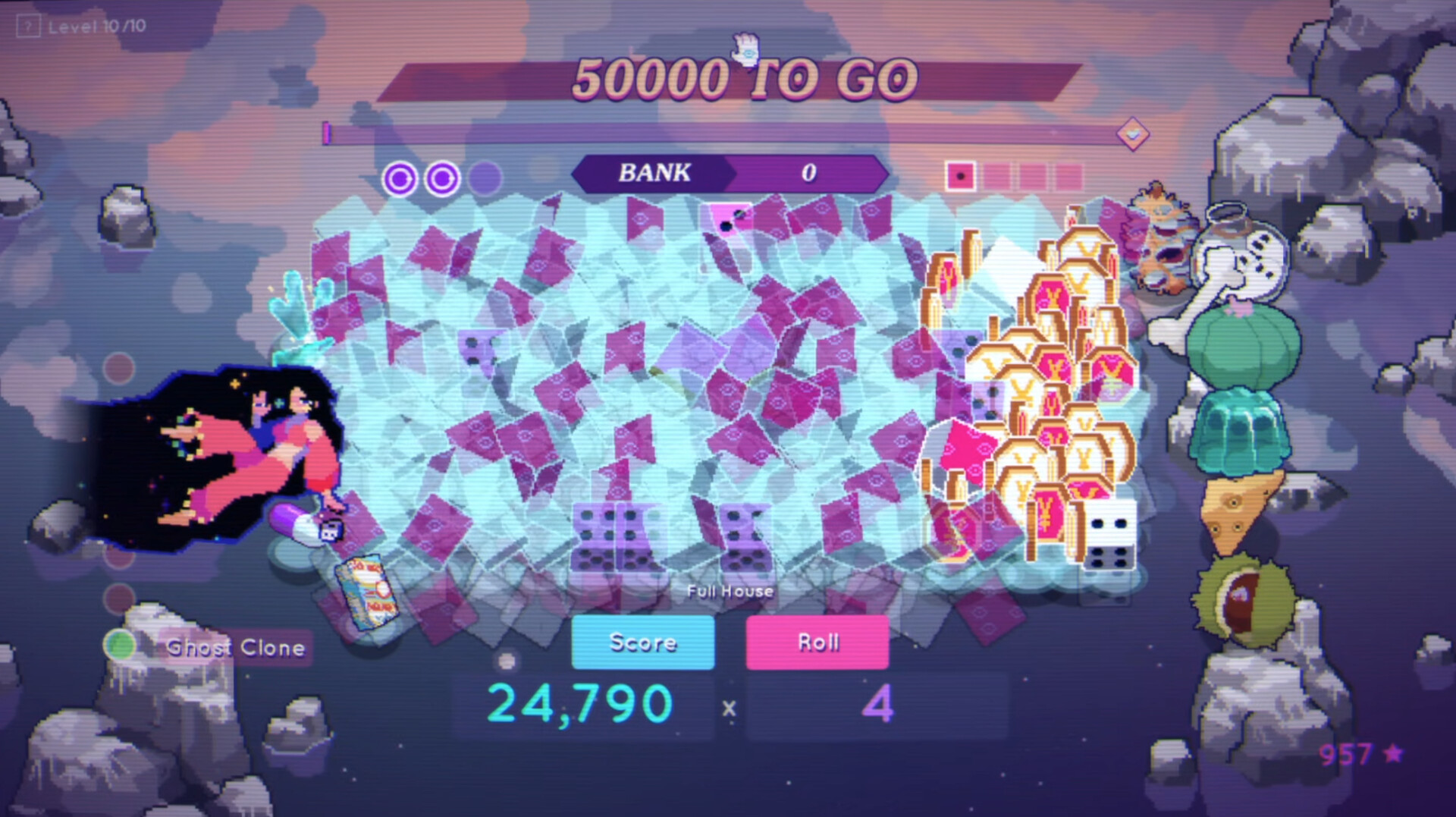
Companions are the quiet half of Dice Have No Eyes character building. You pick a face for the headline fantasy—Wizard shields, Anais smites, Hotdog chaos—then a companion power decides whether that fantasy survives contact with bust math. The Steam feature list calls out 13 companions with unique powers, and Early Access updates made it clear that dog-themed kits are not a side meme; they are tempo machines. This page explains how to think about the full companion layer after the November 20, 2026 1.0 release.
For face rankings see Characters. For loot verbs see Trinkets and Builds. For roster context return to the Characters Hub.
What companions actually do
A companion is a persistent rule hanging off your run:
- Change how many rolls you want to take
- Change how busts or turns are budgeted
- Enable silly-but-real loops like self-eat economies
- Nudge scoring, shop pressure, or survival just enough that trinket drafts must respond
If you draft Mirror engines while your companion wants fewer rolls, you will feel “unlucky” when you were actually inconsistent. Read the passive before you open the shop.
Dog-featured kits you should know by name
Dog
Dog is the good-boy package from the Dogs and Guts update: tiny bust limit, many turns, and a power that helps you get away with fewer rolls. The fantasy is stretched decision-making on a thin safety margin. You are not invincible; you are careful for longer.
Pair Dog with:
- Hardy sustain so thin bust margins recover
- Skip tools when you know the face you need without extra greed
- Cautious Faraway Lands bets until you trust the limit
Avoid pairing Dog with drafts that demand constant max-greed cycles. The tiny bust limit is the point.
Hotdog
Hotdog flips the fantasy: lots of busts, only one turn, and a power that lets you eat yourself throughout the game. It is a spike companion/character fantasy. Everything in the draft should serve a single decisive sequence.
Pair Hotdog with:
- Skip tempo to reach key values fast
- Snacks spent early, not hoarded
- Builds that accept reset-on-failure instead of marathon Rift tourism
If you try to play Hotdog like Wizard, the kit will feel broken in the wrong direction.
Fat dog energy and 1.0 presentation
Developer posts lean into the joke that the game has a fat dog, and the art direction sells companions as memorable creatures rather than stat stickers. That presentation matters for readability: you should recognize your companion at a glance even in night mode on Steam Deck. Mechanically, treat every dog-adjacent power as a tempo thesis first and a mascot second.
How to categorize the other companions
Until you memorize all thirteen names, sort unknown companions into jobs:
- Economy companions — help cash, shops, or conversion (excellent with Anais).
- Safety companions — softens busts, grants outs, or extends turns (excellent with Wizard classrooms and Rift marathons).
- Greed companions — push multipliers, babies, or volatile effects like Doom.
- Tempo companions — change roll count, turn count, or force short sequences (Hotdog family).
- Specialty companions — enable weird 1.0 toys, score combinations, or Depth-specific tricks.
When a companion description is poetic instead of numeric, run one Shallows experiment before you take it into bets. Mid-run saves in 1.0 make those experiments cheaper.
Pairing matrix by Depth
Shallows
Goal: learn. Pick safety or simple tempo companions. Wizard + safety dog energy teaches banking. Avoid max bet mentalities you do not have yet.
Faraway Lands
Goal: bets. Economy and conversion companions climb because Star payouts and difficulty rise together. Anais plus an economy companion is a classic greed story—only if you already know smite timing.
Rift
Goal: endurance. Safety and Hardy-friendly companions beat one-turn spikes unless you are achievement hunting. Use mid-run saves. Leave Hotdog home unless the board is a planned spike.
God run
Goal: finale and endings. Bring the companion that matches your ending route and leaderboard ambition. Specialty companions that felt optional in Shallows can become mandatory when the dream asks for a specific trick.
Pairing matrix by build verb
- Mirror: companions that protect setup rolls; you need the copied die to exist.
- Skip: companions that reward decisive short lines; do not stack endless setup.
- Hardy: companions that already like long fights; sustain stacks.
- Doom: companions with emergency outs; pure doom-on-doom is a coin flip with extra steps.
- Baby conversion: companions that feed shops or child generation for Anais.
Details for loot verbs live on Trinkets and Builds.
Practical selection checklist
Before lock-in:
- Read the companion power out loud in one sentence.
- Name the Depth you are entering.
- Name the trinket verb you hope to draft.
- Confirm the face (Wizard, Liz, Anais, Dog, Hotdog, King Fetus, Tooth Fairy, etc.) does not fight that sentence.
- If any answer is “I will figure it out later,” pick a safer companion.
Common companion mistakes
- Choosing a companion for art only, then forcing incompatible trinkets.
- Taking Hotdog energy into a bet structure that needs ten careful turns.
- Taking tiny-bust Dog energy into Doom fireworks without cleanse snacks.
- Ignoring companions entirely and wondering why identical trinket drafts feel inconsistent.
- Never retesting after 1.0 control and Deck polish—input comfort changes how often you misclick a power.
Progress and unlocks
Companions and characters both lean on the Star / Gold Stars progression fantasy introduced and expanded through Early Access. Win runs, spend currency on purpose, and do not unlock five companions before you understand one. The Updates Hub tracks when dog kits, parenting items, and 1.0 systems landed if you are returning from a break.
Related reading
- Characters Hub for faces
- Anais for smite economies that love the right companion
- Character Tier List for who to main
- Version 1.0 for finale systems that change companion value
- Controls if Deck or controller inputs make companion powers awkward
Thirteen powers is enough to keep the dream weird for a long time. Pick one job per run and let the dice do the rest.
Frequently Asked Questions
Quick answers to the most common questions.
How many companions does Dice Have No Eyes have?
The game features 13 companions with unique powers. Dog and Hotdog kits from Dogs and Guts are the clearest public tempo examples.
Should beginners use Dog or Hotdog first?
Dog teaches careful multi-turn play on a tiny bust limit. Hotdog is a one-turn spike. Most beginners learn more from Dog or a safety companion first.
Do companions matter as much as trinkets?
Yes. A companion sets constraints for the whole run. Trinkets should amplify that constraint instead of fighting it.
Can I change companions mid-run?
Plan companion choice during setup. Use mid-run saves in 1.0 to pause long experiments, but treat the companion as a locked thesis for that attempt.
Where should I go after picking a companion?
Open Trinkets and Builds for a matching verb, then Characters if you still need a face ranking for your Depth.