Dice Have No Eyes Dice Effects Guide
Learn what Mirror, Skip, Hardy, and Doom actually change—and how babies and snacks finish the verb.
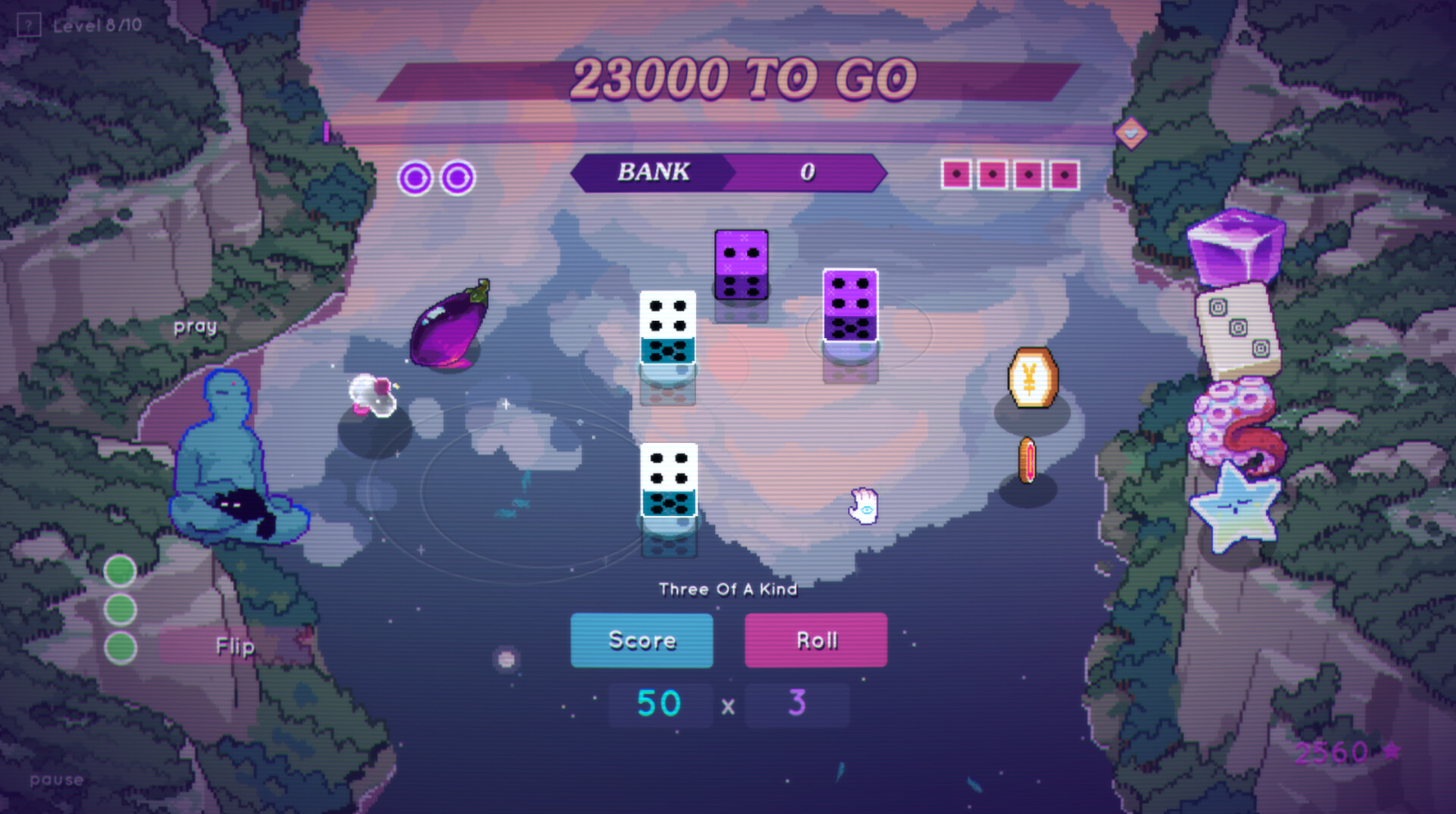
Magic dice effects are how Dice Have No Eyes stops being “Yahtzee with vibes” and becomes a build craft game. Franek and Max Cahill lean hard on named tools such as Mirror, Skip, Hardy, and Doom, plus cracked or unholy die states, dice babies with multiple score effects, and the snack/trinket soup that makes those effects sing. This page is the effects primer for the November 20, 2026 1.0 build after Early Access from May 19, 2026. Pair it with How to Play for bust math, Trinkets and Builds for synergy verbs, Beginner Tips for greed discipline, and Version 1.0 for launch polish that changed how fragile dice feel.
Effects do not replace banking. They change which rolls are legal, which failures are cheap, and which shop buys finish a sentence instead of starting five new ones.
Why effects matter more than raw faces
A plain die asks you to roll and hope. An effected die asks you to sequence. Mirror wants a die worth copying. Skip wants a target value without extra greed cycles. Hardy wants long fights and recovery. Doom wants cleanse tools and iron bank thresholds. Babies want feeding routines and—sometimes—conversion timing if you play Anais.
If your shop cart is a museum of unfinished effects, every board will feel “unlucky.” Finish one verb.
Mirror
Mirror is the copy fantasy. When a die (or a baby-enhanced slot) becomes the best thing on the table, Mirror packages let you duplicate that strength instead of praying the next shop reprints it. Mirror loves setup turns: establish the strong piece, protect the setup with a snack if needed, then let the copy do work across later boards.
Play Mirror when:
- You already have a clearly best die or child-enhanced face.
- Your companion does not punish the extra setup rolls Mirror sometimes needs.
- You are on a Depth long enough for the copy to pay rent (Faraway Lands, Rift, God run).
Avoid Mirror when every die is mediocre and you are copying noise. Also avoid pairing Mirror with companions that demand one-turn Hotdog spikes unless you have a precise script.
Skip
Skip is tempo. It helps you reach a needed face or value without taking every greedy intermediate roll. That makes Skip excellent on bet boards and spike kits where time is the real bust tax. Early Access players remember Skip feeling cursed before the July 30, 2026 Skip Effect Fixes; if you bounced off Skip in early summer, retest after those fixes and again after 1.0 polish.
Play Skip when:
- You know the exact value you need.
- Extra exploratory rolls would only inflate bust risk.
- Your kit is a short decisive line rather than a marathon nursery.
Skip is not “always fewer rolls forever.” It is “fewer useless rolls.” Bank when the skipped path already cleared the need.
Hardy
Hardy is sustain. It encourages lines that would be suicide on glass dice because recovery and long-board presence matter more than a single perfect spike. Rift tourism and careful God run attempts love Hardy. Dog-style tiny-bust, many-turn kits often rhyme with Hardy better than Hotdog one-turn chaos does.
Play Hardy when:
- You expect nightmares, bets, or endless depth to tax multiple turns.
- Your companion already likes stretched decision-making.
- You are willing to win ugly with consistent banks instead of viral overscores.
Hardy is not permission to ignore bust math. It is permission to take planned risk when the board is a marathon.
Doom
Doom is voluntary volatility. It can create spectacular hands and spectacular obituaries. Draft Doom only with emergency outs: purge snacks, cleanse tools, shield-style faces, or companions that grant exits. Pure doom-on-doom without a bank rule is a coin flip wearing eyeliner.
Play Doom when:
- You can name the cleanse plan in one sentence.
- You have a hard bank threshold written before the turn starts.
- You are chasing a specialty achievement or ending route that wants fireworks—not when you are still learning Shallows.
If Doom is carrying your personality more than your plan, drop it and return to Beginner Tips.
Cracked, damaged, and unholy dice in 1.0
Coverage of the 1.0 notes calls out gentler handling for damaged unholy die cases, alongside broader audiovisual polish and bug fixes. Read that as QoL for fragile or cursed states that used to feel crueler in Early Access. Cracked or unholy dice still change risk—they are not cosmetic stickers—but 1.0 is less interested in punishing you with opaque jank on top of the greed lesson.
Practical habits:
- Identify whether a cracked/unholy state is a temporary tax or a build centerpiece.
- Keep a purge or repair snack in mind before you build a religion around the damage.
- Do not enter God run to “learn” a cursed die; practice it on Shallows or a saved Rift segment first.
Dice babies and multiple score effects
Dice babies are not only Anais joke fuel. 1.0 expands babies and scoring combinations so children can carry multiple score effects and strange passives before anyone smites anything. Feeding snacks is build craft: you are teaching the die which hands to love.
Baby priorities:
- Effects that reinforce the hands you already score.
- Passives that do not fight your companion tempo.
- Conversion value if you are on Anais and the shop needs cash now.
- Purge tools so negative sides do not turn the nursery into a haunted house.
Multiple score effects stack the temptation to greed. Remember: unbanked points are imaginary until you bank them. Babies multiply both glory and donation size.
Synergies with snacks and trinkets
The live game advertises 100+ trinkets and 40+ spells and snacks. Effects are the grammar; snacks/trinkets are the sentences.
- Mirror + economy trinkets: copy the paid-for die, not the free trash.
- Skip + spike snacks: spend early to reach the line, then bank.
- Hardy + sustain trinkets: win long Rift segments without reinventing the kit every board.
- Doom + purge snacks: keep the firework from burning the nursery.
- Baby score effects + parenting/diet lines: grow, cleanse, convert on purpose.
Wide collecting without a verb creates the classic failure mode: a powerful-looking bag that still busts because no effect answers the board’s actual question. Finish packages on Trinkets and Builds.
Depth fit for each effect family
- Shallows: learn one effect. Prefer Mirror or Hardy over Doom tourism.
- Faraway Lands: Skip and Mirror shine when bets raise the bar; Hardy stabilizes nightmares.
- Rift: Hardy and baby engines; use mid-run saves; Doom only with cleanse.
- God run: bring a finished verb—see the God Run guide once it is in your map—and refuse unfinished museums.
Common effect mistakes
- Buying every named effect because the word looks cool.
- Mirroring a mediocre die out of fear of missing out.
- Ignoring Skip after early-summer bugs without retesting post-fix / 1.0.
- Playing Hardy like invincibility.
- Drafting Doom with zero purge plan.
- Feeding babies that fight your hand shapes.
- Treating cracked/unholy drama as a substitute for banking discipline.
Practice plan
- Run Shallows focusing on a single effect family.
- Repeat Faraway Lands with the same family under a modest bet.
- Save a Rift attempt mid-run and review whether snacks still match the effect.
- Only then mix a second effect or push finale ambitions.
- Cross-check How to Play whenever greed starts winning arguments the effects cannot pay for.
Related reading
- How to Play — bust, momentum, banking thresholds
- Trinkets and Builds — finish Mirror / Skip / Hardy / Doom packages
- Version 1.0 — gentler unholy handling, more babies, rebalances
- Beginner Tips — habit repair when effects tempt one more roll
Effects give the God n’ Fate engine new toys. Your job is still the boring one: know what the die does, know what the snack fixes, and bank when the pile is already enough.
Frequently Asked Questions
Quick answers to the most common questions.
What are the main magic dice effects in Dice Have No Eyes?
Headline named effects include Mirror, Skip, Hardy, and Doom. Babies, cracked or unholy states, snacks, and trinkets modify how those effects play.
When should I take Mirror?
Take Mirror when you already have a clearly best die or baby-enhanced piece worth copying, and the Depth is long enough for the copy to pay off.
Why did Skip feel bad for some Early Access players?
Skip reliability issues showed up mid-EA; July 30, 2026 Skip fixes and later 1.0 polish are why returning players should retest Skip packages.
Are cracked or unholy dice softer in 1.0?
Launch notes describe gentler handling for damaged unholy die cases. They still change risk, but 1.0 reduces opaque punishment on top of normal greed pressure.
How do dice babies interact with effects?
Babies can carry multiple score effects and passives. Feed snacks that reinforce your hands, cleanse negative sides, and only convert children when the shop timing is worth more than the passive.